

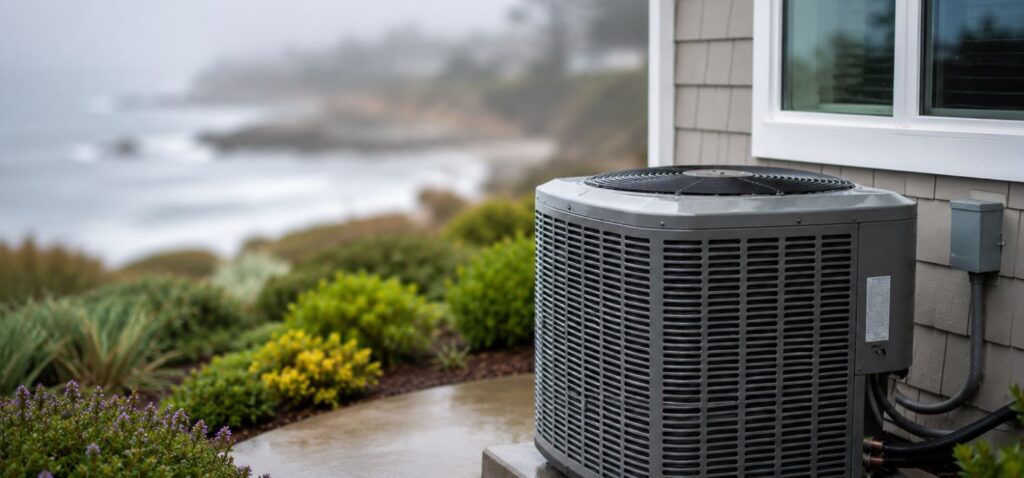
Living near the Monterey, CA, coast has plenty of perks. Ocean views, cool mornings, salty breezes, and fog that rolls in like it owns the place all come with the territory. Your HVAC system feels that coastal weather too, and not always in a good way.
Salt air, moisture, and fog can wear down outdoor equipment faster than many homeowners expect. At DB Heating Cooling, we help Monterey-area homeowners protect their heating and cooling systems from local conditions through smart maintenance, practical repairs, ductwork support, indoor air quality solutions, and system upgrades as needed.
Why Coastal Weather Is Tough on HVAC Systems
Monterey’s coastal climate creates a mix of salt, moisture, and cooler marine air. That combination can be rough on metal parts, electrical components, coils, ductwork, and indoor air quality. Salt particles can settle on outdoor equipment, while moisture helps corrosion move along faster.
Think of your outdoor unit like a bike left near the ocean. Even if it still works, the salty air slowly starts showing up as rust, worn hardware, and rougher operation. HVAC systems face the same exposure but also involve moving parts, refrigerant coils, electrical connections, drain lines, and airflow requirements.
The American Society of Heating, Refrigerating and Air-Conditioning Engineers has noted that corrosion can be a serious issue in refrigeration and air conditioning systems exposed to marine environments. That tracks with what our HVAC contractors see in the field around Monterey, Pacific Grove, Carmel, Marina, Seaside, and nearby coastal communities.
Salt Air and Corrosion Risks
Salt air doesn’t need a storm to cause problems. Tiny salt particles can collect on condenser coils, cabinets, screws, fan guards, and electrical areas over time. Once moisture enters the mix, oxidation can accelerate and begin damaging metal surfaces.
The first signs can look minor. A little rust around screws, a coil that looks dull or crusty, or a cabinet panel that starts to pit may not seem urgent. Left alone, those signs can lead to reduced airflow, reduced heat transfer, refrigerant leaks, noisy operation, or parts failing earlier than expected.
During service visits, we look for corrosion in the areas that tend to take the hardest hit first, including:
- Drain pans and exposed metal surfaces
- Electrical terminals and contactors
- Fasteners, panels, and brackets
- Outdoor coils and fins
Coastal corrosion doesn’t always mean the system needs replacement. Sometimes, a thorough cleaning, part replacement, coil treatment, or maintenance plan can help extend the life of the equipment. Other times, corrosion tells us the system has reached the point where repairs may no longer make good financial sense. Either way, we explain what we find in plain language so you can make a clear decision.
Moisture, Humidity, and Indoor Comfort
Salt gets a lot of attention, but moisture deserves just as much respect. Monterey’s foggy weather can raise indoor humidity, especially in homes with poor ventilation, older ductwork, or HVAC systems that do not remove enough moisture during operation.
High humidity can make a room feel sticky or stale even when the thermostat reading looks fine. It can also contribute to musty odors, condensation, damp insulation, and mold concerns.
When we evaluate indoor air quality concerns, we look beyond the filter. Airflow, duct condition, drainage, equipment performance, and ventilation all matter. A musty smell might come from a clogged drain line, a dirty coil, leaky ducts, or moisture collecting where it shouldn’t. Guessing rarely helps, so we trace the issue and recommend the simplest fix that makes sense.
HVAC Parts That Often Feel Coastal Wear First
Coastal weather can affect the whole system, but some parts tend to show damage earlier than others. Outdoor coils often take the lead because they sit directly in the path of salt air, moisture, and debris. Dirty or corroded coils reduce heat transfer, which can force the system to run longer.
Electrical components also deserve attention. Moisture and corrosion can affect connections, contactors, capacitors, and wiring. Once electrical components start struggling, you may notice buzzing, hard starts, random shutdowns, or tripped breakers.
Ductwork can create another layer of trouble. Leaky, damaged, or poorly insulated ducts can pull in dusty or damp air, lose conditioned air, or create uneven temperatures throughout the home. Our duct repair and whole-system re-duct services help address recurring airflow issues.
Better Equipment Choices for Coastal Homes
When a system needs replacement, coastal conditions should influence the conversation. Standard equipment can work, but the details matter. Protective coatings, corrosion-resistant materials, smart placement, and proper drainage can help the system better withstand environmental conditions.
Some homes benefit from ductless mini-splits, especially in additions, older homes, or areas where ductwork isn’t performing well. Others need a new heat pump, air conditioner, furnace, or duct redesign to solve the real comfort problem. We match recommendations to the home rather than forcing a single solution in every situation.
For coastal installations, we often look at:
- Coated or corrosion-resistant coils
- Drainage that moves moisture away from sensitive areas
- Proper equipment elevation and clear airflow
- Stainless or coated fasteners where appropriate
A good installation should set the system up for better performance from day one. That means clean workmanship, clear airflow, correct sizing, and a plan for future maintenance.
Maintenance That Helps Fight Salt and Moisture
Regular maintenance matters everywhere, but it matters even more near the coast. Salt buildup, fog, and damp conditions can turn small issues into bigger repairs if nobody checks the system regularly. Professional maintenance gives us a chance to clean coils, check drains, test electrical components, inspect corrosion, verify airflow, and catch worn parts early.
Homeowners can help by keeping outdoor units clear of leaves, plants, and debris. A gentle fresh-water rinse can help remove salt buildup from the outside of the unit, though electrical areas and delicate coil fins need care. Filters should be checked regularly because clogged filters restrict airflow and make the system work harder.
For Monterey homes, we usually recommend seasonal maintenance before heating and cooling demand picks up. That rhythm helps the system handle cool coastal mornings, warm inland afternoons, and all the foggy in-between weather Monterey likes to throw at us.
Indoor Air Quality Support for Coastal Living
Indoor air quality is closely related to coastal HVAC performance. Moisture, dust, odors, and poor airflow can make a home feel less comfortable, even when the equipment is running. We help with air purification options, filtration improvements, duct services, and ventilation recommendations that align with the system’s actual capacity.
The goal stays practical. A better filter may help one home, while another may need duct repairs, drainage work, or a more complete airflow evaluation. We avoid overcomplicating the fix because most homeowners just want the house to feel cleaner, fresher, and more comfortable.
Our Conclusion
Coastal weather is part of life in Monterey, and your HVAC system needs a little extra help because of it. Salt air can accelerate corrosion, moisture can affect comfort and air quality, and foggy conditions can make small equipment problems appear sooner.
Our team helps protect local homes through heating and air conditioning services tailored to Monterey’s coastal conditions. With the right care and a clear plan, your system can stay more reliable, more comfortable, and better prepared for whatever the coast brings next.