

You may wonder how often to change your air filters if the technician didn’t provide this information during your heating or AC installation. Unfortunately, there isn’t a one-size-fits-all answer, as every home environment is unique. Learning the right schedule for an air filter replacement is the first step to cleaner air and an efficient HVAC system.
You might not give that simple mesh screen much thought, but it performs a vital job. It serves as the primary defense for your family’s health and your wallet. A regular HVAC maintenance schedule that includes filter changes provides significant cost savings over time. In this article, you’ll learn how often you should change your air filters based on your home, allergies, and pets.
Why a Clean Air Filter Matters More Than You Think
Your HVAC system’s air filter has one main job. It traps airborne particles, including dust, pet dander, pollen, and other irritants. This action stops them from circulating throughout your home and entering your lungs.
When that filter gets clogged, problems begin to pile up. Your heating and cooling system must work much harder to push air through the thick layer of grime. This extra strain leads to higher energy bills and can cause expensive damage to your equipment over time.
A dirty filter also stops performing its job well, impacting your indoor air quality. This means more allergens and pollutants float freely in your air. For anyone with allergies, asthma, or other respiratory issues, this can make symptoms much worse.
How Often To Change an Air Filter: A General Guide
So, what is a good starting point? While every home has different needs, general timelines exist based on the filter you use. The type of home air filter plays the biggest part in the replacement schedule.
Most common 1-inch pleated filters found in stores should be changed about every 90 days. This is just a baseline, however. Let’s examine how different filter types compare.
| Filter Type | Recommended Change Frequency |
|---|---|
| Fiberglass Filters (Basic) | Every 30 days |
| Pleated Filters (Standard) | Every 90 days |
| High-Efficiency (High Efficiency Particulate Air (HEPA)) | Every 6–12 months |
Different Filter Types and Timelines
The inexpensive, blue fiberglass filters are very basic. They catch large dust particles but allow smaller allergens to pass through. Because they clog so quickly, you must swap them out every month.
Pleated filters offer a great balance of performance and price. Their folded design creates more surface area to trap dust and pollen effectively. These are the most popular choices for homeowners and usually last up to three months.
High-efficiency filters, including some with a high minimum efficiency reporting value (MERV) rating or HEPA filters, provide the best filtration. They capture tiny particles such as bacteria and mold spores. You’ll typically find these in stand-alone air purifiers or specialized HVAC systems, and they may only need replacement once or twice a year.
Factors That Change the Timeline
The 90-day rule is a helpful guideline, but your lifestyle will certainly alter it. Several factors may require you to change your filter more frequently. This is where you need to assess your specific home environment.
Do You Have Pets?
If you share your home with furry friends, their hair and pet dander will clog a filter quickly. A home with even one dog or cat should probably have its filter changed every 60 days. This small adjustment makes a big difference for you and your pets.
Allergies or Asthma in the House?
Does anyone in your home suffer from allergies or other respiratory conditions? If so, you should be more diligent with your air filter replacement schedule. Swapping it out every 45–60 days helps keep airborne irritants to a minimum, as a cleaner filter will do a better job trapping troublesome particles.
Where Is Your Home Located?
Your local environment matters, too. Homes near construction sites, in polluted cities, or in areas with frequent wildfires will pull in more outside contaminants. If this describes your area, check your filter monthly and change it when it looks dirty, regardless of how long it has been in use.
Home Usage and Occupants
A household with several people and lots of activity will stir up more dust than a home with one or two occupants. If anyone smokes inside, you should change the filter at least every 30–60 days to handle the smoke particles.
Conversely, a vacation home that is unoccupied for long periods won’t need its filter changed as often. A single person living in a clean apartment may also extend the filter’s life. Adjust your schedule based on your home’s unique conditions.
Telltale Signs Your Air Filter Is Crying for Help
You don’t have to rely only on the calendar. Your house will give you clear signals that your filter is past its prime. Learning to spot these signs can save you money and frustration.
The easiest method is a simple visual inspection. Pull the filter out and hold it up to a light. If you can’t see the light passing through it, it’s definitely time for a new one.
Have you noticed your utility bills creeping up for no apparent reason? A clogged filter forces your HVAC system to run longer and harder, which directly impacts your energy bills. That sudden spike could be pointing straight to a dirty furnace filter or air conditioner filter.
You might also notice your system is not keeping up. If it takes longer than usual to cool down or heat up your house, poor airflow from a clogged filter is a very likely culprit. You may also notice dust accumulating on furniture more quickly after you have cleaned.
A Simple Guide to Changing Your Air Filter
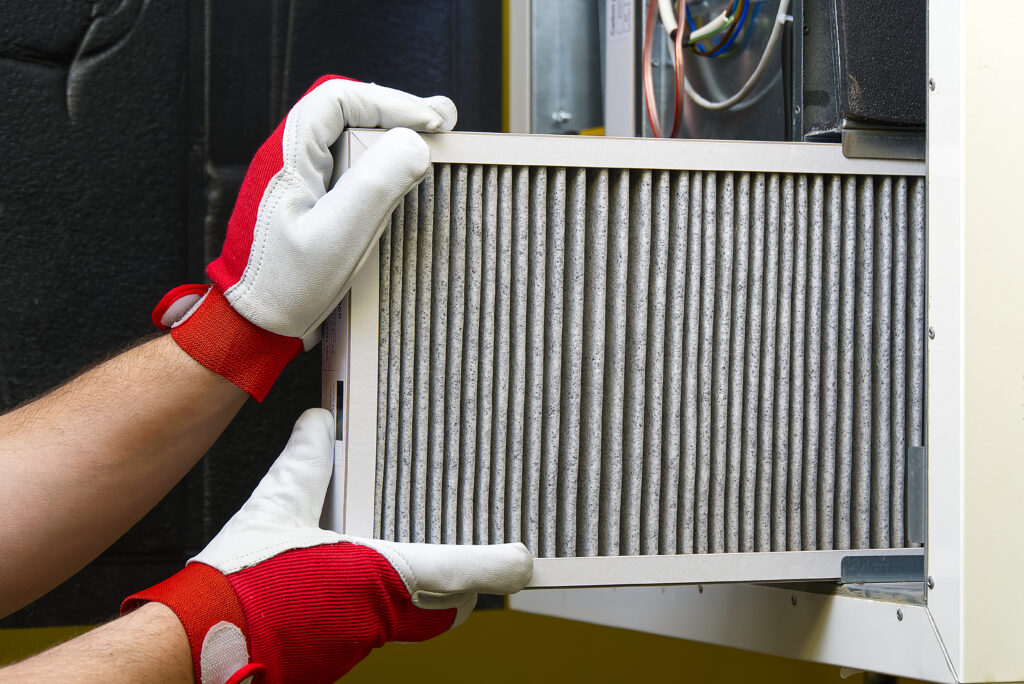
The good news is that changing a filter is one of the easiest do-it-yourself home maintenance jobs. It usually takes just a few minutes and requires no special tools. First, make sure you have the correct furnace filter size. It’s usually printed on the side of the old filter.
- Find the filter slot. It’s typically located inside the furnace or air handler, or in a return air vent in a wall or ceiling.
- Turn off the power. Before you do anything, switch your HVAC system off at the thermostat or the circuit breaker for safety.
- Remove the old filter. Slide the old, dirty filter out of its slot. Note the arrow on the frame that shows the direction of airflow so you can install the new one correctly.
- Install the new filter. Slide the new filter into the slot, making sure you have the right size. Check that the arrow on the new filter is pointing in the same direction, which should be toward the furnace blower motor.
- Write down the date. Use a marker to write the date of the change directly on the new filter’s frame. This makes it easy to track how long it has been since the last change.
- Turn the system back on. Replace any cover panels, then restore power to the system. You are all set.
What Happens If You Don’t Change Air Filters?
Ignoring your air filter might seem harmless, but it can lead to serious consequences for your HVAC system. The continuous strain on your system can cause the fan motor to overheat and fail. In summer, restricted airflow can cause the evaporator coil on your air conditioner to freeze over, which could damage the compressor.
In winter, a clogged filter can cause a furnace to overheat, potentially leading to a cracked heat exchanger. A cracked heat exchanger is a serious safety hazard, as it can leak carbon monoxide into your home. These types of major repairs are far more expensive than the cost of a new filter.
That extra work also consumes a lot more energy. According to the Department of Energy, a clean filter can reduce your air conditioner’s energy consumption. This is a significant source of cost savings. Finally, it harms your indoor air quality, which is bad for everyone, especially for children and people with health conditions.
Our Conclusion
Changing air filters is one maintenance task that we found many homeowners in Monterey, CA, and the surrounding areas often overlook. However, staying on top of this simple task makes a huge difference. It protects your HVAC system from needless strain, helps lower your energy bills, and keeps your indoor air much cleaner. Figuring out how often to change the air filter in your specific home is straightforward.
Start with the manufacturer’s recommendation for your filter type. Then, adjust that schedule based on factors like pets, allergies, and your local environment. A quick monthly check is a great habit to form. This small chore delivers big rewards for your home’s health and your comfort.