

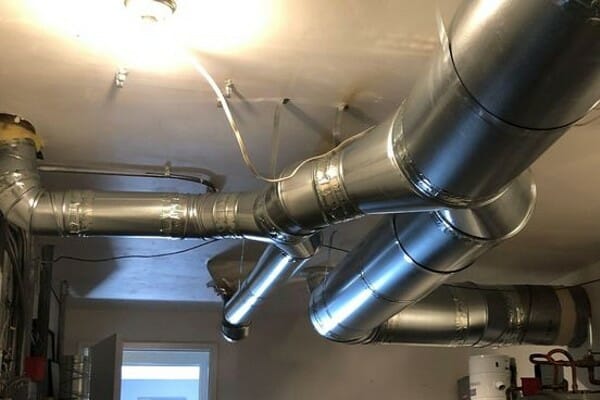
Planning an AC installation in your Monterey, CA, home? Most people focus on just the unit, but there’s a crucial piece of the puzzle that often gets overlooked: the ductwork needed to distribute the air. This network of hidden air pathways in your walls and ceilings plays a massive role in how well your AC system actually performs.
Even the best air conditioner can’t fix leaky, undersized, or poorly designed ducts. If your ductwork isn’t up to par, you could end up with uneven temperatures, higher energy bills, and an overworked system. At our Monterey-based HVAC company, we’ve seen how the right duct design can completely transform comfort and efficiency. After all, it’s the behind-the-scenes hero of a successful AC installation, and it deserves just as much attention. In this article, we’ll share everything you need to know about why your ductwork matters and why good ductwork design is a must.
What Exactly Is Your Home’s Ductwork?
Think of your HVAC ductwork as the circulatory system for your house. Your heat pump, furnace, or air conditioner creates warm or cool air. The ducts are the arteries that deliver that conditioned air to every single room.
Essentially, it’s a complete network made to move air from your HVAC unit out to your living spaces through supply vents. It also pulls stale air back to the unit through return vents to be filtered and reconditioned. If this system is leaky, undersized, or poorly planned, the entire process fails.
You can have the best HVAC unit on the market, but without a good delivery system, that expensive equipment just works harder, not smarter. You end up paying for heated or cooled air that gets lost in your attic or crawl space.
The Different Faces of Ductwork: Materials Matter
Not all ducts are made the same. The material used has a big impact on durability, air quality, and overall efficiency.
Flexible Ductwork
You may have seen this type of ductwork design before. It looks like a slinky covered in a thick plastic liner and insulation, and it’s made from a metal wire coil, which gives it shape.
Its main advantage is its flexibility, which makes it good for navigating tight or awkward spaces where rigid ducts just won’t fit. But it has drawbacks. The ribbed interior can restrict airflow if not installed perfectly straight, and it’s more prone to kinks, tears, and sagging over time.
For these reasons, flexible ductwork is best suited for short connections, such as joining a supply trunk to a register boot, rather than for entire duct runs.
Rigid Ductwork
As the name suggests, this type of ductwork is stiff and solid. It’s generally seen as a more durable, reliable, and efficient option for most residential systems. These ducts come in several different materials.
Sheet Metal Ducts
This is the workhorse of the residential duct world, usually made from galvanized steel or aluminum. Because metal is nonporous and smooth, it doesn’t trap dust and other contaminants easily. This physical property helps prevent the growth of mold.
The smooth interior surface also allows air to flow with very little friction, making it an efficient and long-lasting choice. While galvanized steel is extremely durable, aluminum is lighter and naturally resists corrosion. Sheet metal is a fantastic option for a healthy, high-performing duct system.
Ductboard and Fiberglass Liners
Some ducts are made from compressed fiberglass boards or have an internal fiberglass lining. While the built-in insulation can dampen sound from the AC unit, these materials come with serious concerns for homes. Over time, the fiberglass can break down and release small particles into your air supply.
These materials are also difficult to clean properly, and their porous nature can become a breeding ground for mold and bacteria if moisture gets in. Because of these health risks, most HVAC professionals today advise against using fiberboard or fiberglass-lined ducts in a residential setting. Your family’s air quality is just too important.
To make the choice clearer, here is a comparison of common ductwork materials:
| Duct Type | Durability | Airflow Efficiency | Health Risk |
|---|---|---|---|
| Flexible Ductwork | Low (Prone to tears, kinks) | Moderate (Ribbed interior creates friction) | Low |
| Sheet Metal (Steel/Aluminum) | High (Very durable, long-lasting) | High (Smooth interior for minimal friction) | Very Low (Nonporous surface) |
| Ductboard (Fiberglass) | Moderate (Can degrade over time) | Moderate | High (Risk of fiber release and mold growth) |
The Anatomy of Proper Ductwork Design
What goes into a professional, high-performance duct system and efficient ductwork design? It’s a science that blends your home’s specific needs with the laws of airflow. Getting this wrong leads to the problems so many homeowners face.
It All Starts With Sizing
Duct sizing is not a guessing game. Professionals use a set of detailed calculations from the Air Conditioning Contractors of America (ACCA). These standards, known as Manual J, S, and D, determine the exact heating and cooling load of each room.
This tells them exactly how much air needs to get to each space. These manuals provide the foundation for a truly effective system.
- Manual D is the guide for designing the entire duct system, including size, layout, and material, based on the findings of the first two manuals.
- Manual J calculates the heating and cooling load for each room, considering factors such as window size, insulation levels, and sun exposure.
- Manual S helps select the right-sized HVAC equipment to meet the load calculated by Manual J.
If ducts are too small, the system has to force air through at high pressure. This creates noise, puts a huge strain on your HVAC blower motor, and can lead to equipment failure. If ducts are too big, the air moves too slowly, meaning it won’t mix properly in the room, leaving you with stale, uncomfortable spots.
The Layout: Your Home’s Air Highway
The layout is the roadmap for your air. The goal is to create the shortest, most direct path from the HVAC unit to each vent. Fewer twists and turns mean less friction and less opportunity for air to lose its temperature along the way.
An expert designer will map out a system of trunks and branches that fits the unique structure of your house. This avoids long, snaking runs that kill efficiency. A well-planned layout is essential for balanced and effective air distribution.
The Importance of Sealed Joints
Every connection point in a duct system is a potential leak. These small leaks can add up to a massive loss of energy. In a typical house, about 20%–30% of the air moving through the duct system is lost because of leaks, holes, and poor connections.
To stop this, professionals don’t use the cloth-backed tape you buy at the hardware store, which dries out and fails quickly. They use special mastic sealant or metal-backed foil tape to seal every seam and joint. This makes sure the air you are paying to condition actually makes it to your living spaces.
Balancing the Airflow
Proper design also involves balancing the system. This means adjusting the system so each room gets the specific volume of air determined by the Manual J calculation. It’s not about blasting the same amount of air into every room.
HVAC technicians can install small adjustable plates called dampers inside the ducts. These can be fine-tuned to regulate the airflow to each supply vent. Technicians use tools such as a manometer to measure static pressure in the system, which tells them if the airflow is too restricted or too loose, allowing for precise adjustments.
This critical step eliminates the common problem of one bedroom being an icebox while the master bedroom is an oven.
The Huge Payoffs of Getting Ductwork Right
Investing in a well-designed duct system is not just an expense. It’s a smart move that pays you back in many ways. Here is what you can expect when your ducts are working for you, not against you.
-
A More Comfortable Home
This is the biggest benefit you’ll feel immediately. Gone are the frustrating hot and cold spots. A balanced duct system delivers consistent temperatures from room to room, keeping your entire home comfortable year-round.
-
Lower Energy Bills
When your ducts are sealed and properly sized, your HVAC system doesn’t have to run constantly to make up for lost air or struggle against high pressure. It reaches your desired temperature more easily and then shuts off. This efficiency translates directly into lower monthly utility bills.
-
Healthier Indoor Air
Leaky ducts don’t just lose conditioned air. They also pull in bad stuff from your attic, crawl space, or wall cavities.
This includes dust, insulation fibers, pollen, and even moisture, all of which get circulated right into the air you breathe. A professionally sealed system improves your home’s indoor air quality by making sure only clean, filtered air is distributed, which can be a huge help for anyone with allergies or respiratory issues.
-
A Quieter System
Are you tired of hearing rattling, whistling, or booming sounds when your heater or AC kicks on? That noise is often a cry for help from overworked ducts.
Undersized ducts create high-pressure whistling, and poorly secured ductwork can bang and rattle. A well-designed and installed system operates with a gentle hum, letting you enjoy a peaceful home.
-
A Longer Life for Your HVAC System
Your furnace and air conditioner are major investments. Bad ductwork forces these units to work much harder than they were designed to.
This constant strain leads to increased wear and tear on critical components, such as the blower motor and compressor. By giving your equipment an efficient pathway to work with, you can significantly extend the lifespan of your HVAC equipment.
-
Helping the Environment
Being energy efficient is also great for the planet. When your home uses less energy, power plants burn less fuel. This results in fewer greenhouse gas emissions.
Properly designed and efficient ductwork is a simple way you can reduce your home’s carbon footprint. It’s a choice that is good for your wallet and the world around you.
-
Keeps Mold and Fungus Away
Poorly designed or poorly insulated ducts can create big problems with condensation. When warm, humid air comes into contact with a cold duct surface in your attic or basement, water droplets can form.
This moisture creates the perfect environment for mold and mildew to grow. A professional design includes correct insulation and vapor barriers to help prevent condensation from happening in the first place.
-
You Save Money
When you add it all up, the financial benefit is clear. You save money every month on lower energy costs. You also save on expensive repair bills by avoiding unnecessary strain on your HVAC equipment.
The investment in proper ductwork design has one of the best returns of any home improvement project. It’s a one-time fix that keeps putting money back in your pocket for years.
Signs Your Ductwork Might Need Help
How can you tell if your home’s ductwork is the source of your problems? Your house often gives you clues. Here are some of the most common warning signs to look out for.
- Lots of dust. Do you feel like you’re dusting constantly, especially around the air vents? This can be caused by leaky return ducts pulling in dusty air and then blasting it throughout your home via the supply vents.
- Loud and annoying noises. Your HVAC system should operate fairly quietly. Loud rattling, booming, whistling, or humming sounds from the walls or vents are not normal and often point directly to issues with duct sizing or pressure.
- Sky-high utility bills. If your heating and cooling bills seem to climb higher every year for no apparent reason, leaky ducts are a very likely culprit. You’re paying to condition air that never even reaches your rooms.
- Stuffy or smelly air. If you notice some rooms feel stuffy or that there are strange odors when the system kicks on, it could be a sign of poor air return. It can also indicate that your ducts are pulling in musty air from a basement or attic.
- Uneven temperatures. This is the classic symptom. You have certain rooms that are always too hot in the summer or too cold in the winter, no matter how you adjust the thermostat. This points to a problem with air flow balancing or duct layout.
Can I Fix This Myself?
When faced with these problems, many homeowners wonder if they can tackle ductwork as a do-it-yourself project. The honest answer is that it depends. Simple fixes are possible for a handy person.
You can certainly find and seal accessible leaks in your basement or attic with the right materials, such as mastic sealant and foil tape. You can also make sure your duct insulation is in good shape. But when it comes to the core issues of sizing and layout, this is a job best left to the professionals.
A complete and proper ductwork design requires complex calculations and specialized tools, such as manometers and airflow hoods. A small mistake in sizing or layout can make comfort problems even worse or damage your expensive HVAC equipment. It’s simply not worth the risk.
Our Conclusion
Your ductwork might be out of sight, but it should never be out of mind. It forms the very foundation of your home’s comfort, efficiency, and air quality. Seeing it as an active and vital part of your HVAC system is the first step for solving many common household frustrations.
If you’re battling high bills or inconsistent temperatures, the answer might not be a new, bigger HVAC unit. The real solution could be a smarter, more efficient air delivery system. Investing in a proper ductwork design creates a healthier, more comfortable, and less expensive home for you and your family.